|
|
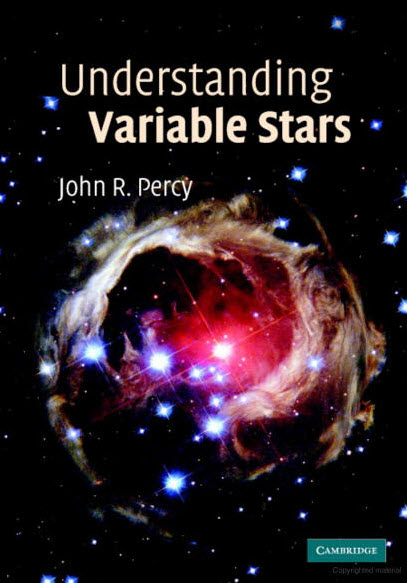
Variable stars are those that change brightness. They come in many varieties, but each one provides important information about the star: its properties, its internal structure, and its evolution. This book provides a concise overview of variable stars, including a historical perspective, an introduction to stars in general, the techniques for discovering and studying variable stars, and a description of the main types of variable stars. Intended for anyone with some background knowledge of astronomy, it is especially suitable for undergraduate students and experienced amateur astronomers.
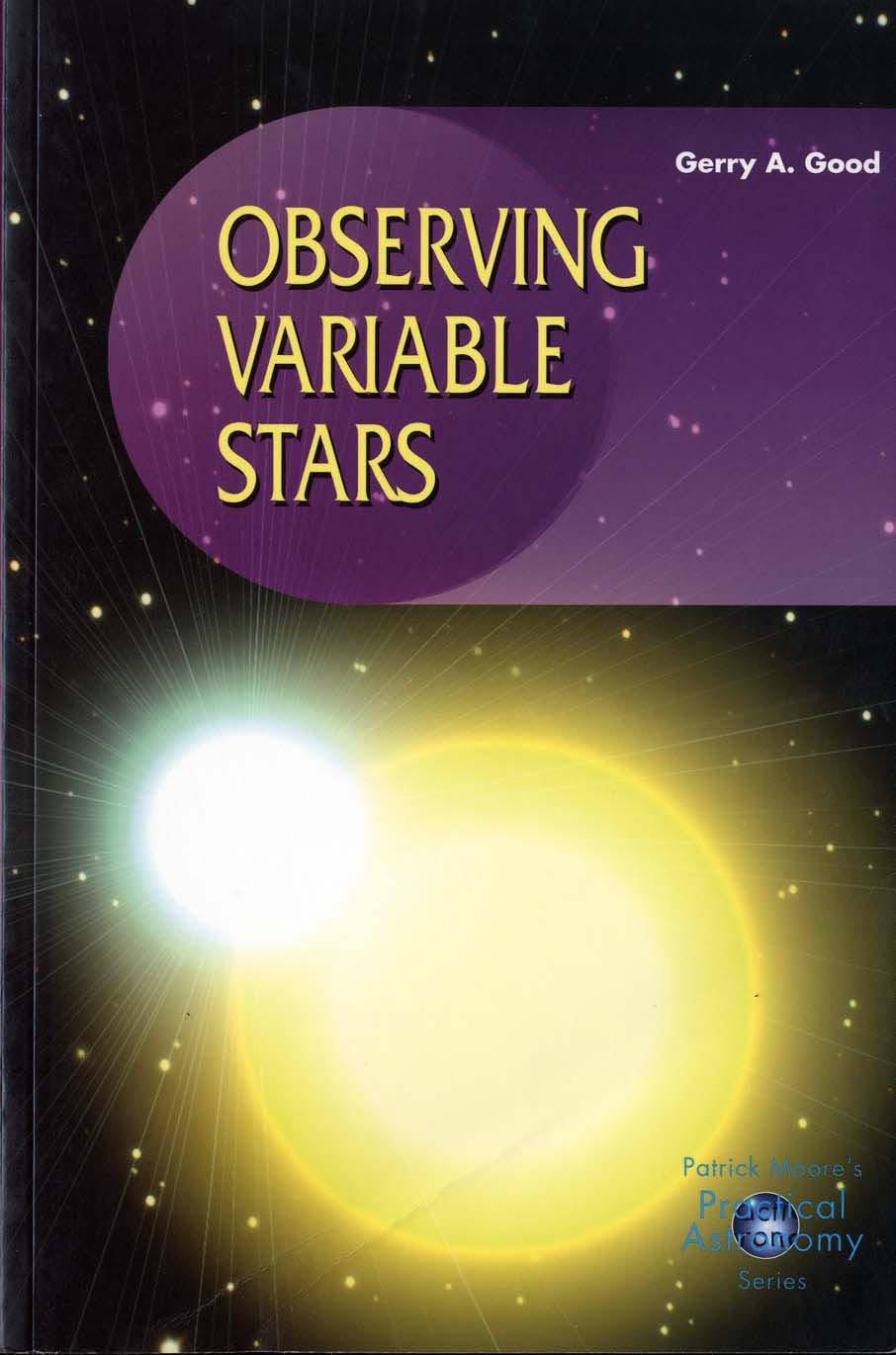
Observing variable stars is one of the major contributions amateur astronomers make to science. There are 36,000 variable stars listed in the General Catalogue of Variable Stars, so it is clearly impossible for the limited number of professional observatories to target even the majority of them. That's where amateur astronomers come in - thousands of them turning their telescopes to the sky every night. Variable star observing is the most popular of "real science" activities for amateurs, and Gerry Good's book provides everything needed. The first part of the book provides a highly detailed account of the various classes of variable star, with examples, illustrations and physical descriptions. The second section covers practical aspects of observing, everything from preparation and planning, through observing techniques, to data management and reduction.
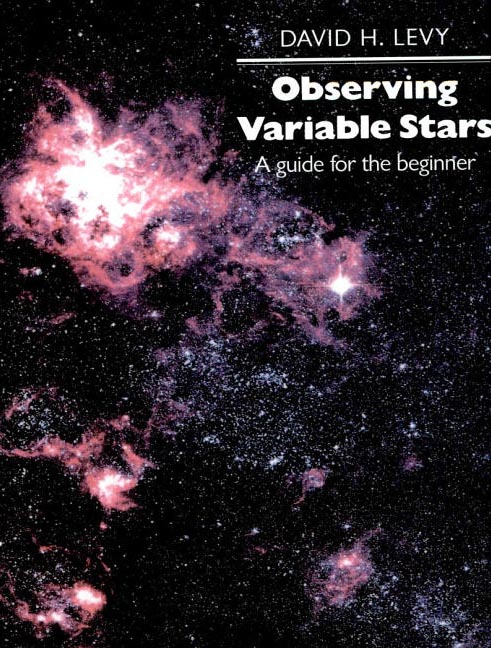
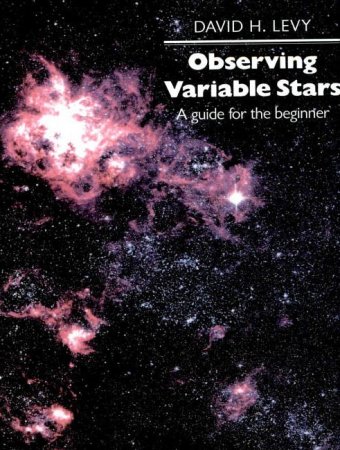 Variable star astronomy is one field which still allows amateur astronomers to make significant contributions to the advancement of science. Everyone can play a part in variable star observations, using a small telescope, binoculars, or even the naked eye. Written by an award-winning astronomer, Observing Variable Stars provides a comprehensive introduction to the field of variable star observation for the amateur. The book begins with advice on binoculars and telescopes, and on how and when to observe stars effectively. Levy then explains the ways in which to interpret variation in light output in terms of the life of a star, from birth to sometimes violent death. All the major variables are described and classified, as well as other variable objects such as active galaxies, asteroids, comets, and the sun. The book also illustrates how astrophysicists interpret variations in light output in terms of the evolution of stars. Observing Variable Stars contains a seasonal guide to the night sky usable in all latitudes. Throughout, practical observations serve to complement the text, making this an enjoyable, readable introduction to an exciting area of astronomy.
The AAVSO Manual for Visual Observing of Variable Stars is a comprehensive guide to variable star observing. It incorporates a lot of the basic information in the Manual for Observing Variable Stars, published in 1970, as well as information from various AAVSO observing materials published since then. The most recent revision occurred in January, 2005. This manual provides up-to-date information for making variable star observations and reporting them to the AAVSO.
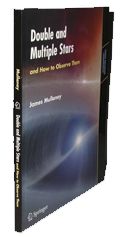
Double & Multiple Stars, and How to Observe Them is written specially for practical amateur astronomers who not only want to observe, but want to know and understand the details of exactly what they are looking at.
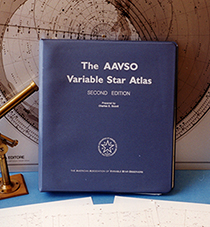
Indicates locations of all stars down to magnitude 9.5, as well as brighter variable stars whose magnitude range exceeds 0.5. Also includes all other fainter variables in the current observing program of the AAVSO and the RASNZ . Comparison stars, with magnitudes indicated, are also shown where possible. The atlas also contains all galaxies contained in the Shapley-Ames Catalogue, all Messier objects, and many other deep-sky objects, as well as diffuse and planetary nebular. 8.5 x 11-inch pages in a 10.25 x 11.5-inch loose-leaf notebook.
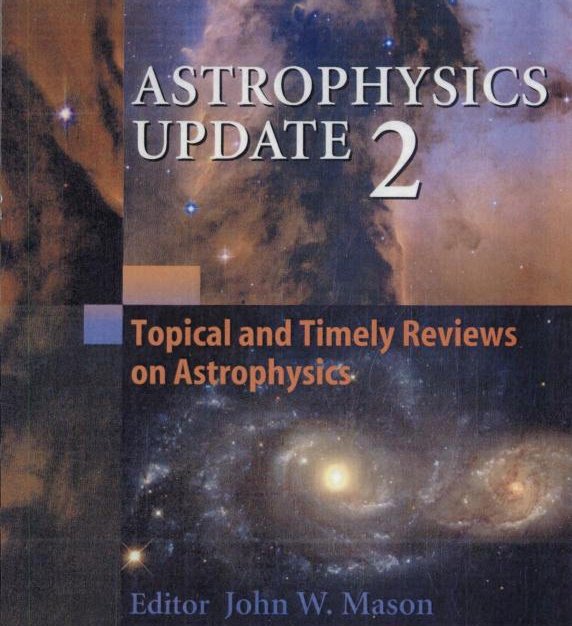
Книга "Новое в астрофизике" предназначена в помощь профессиональным астрономам и аспирантам. Она охватывает разные области астрономии, астрофизики и космологии, которые активно развиваются в последнее время. В книге описываются как наблюдательные методы и результаты астрономических наблюдений, так и их теоретическое обоснование и взаимосвязь. Представленные статьи написаны экспертами в формате доступном для астрономов и астрофизиков, которые интересуются областями вне их обычных областей исследования. Эта подборка обзоров также может привлечь внимание астрономов-любителей, интересующихся данными областями науки.
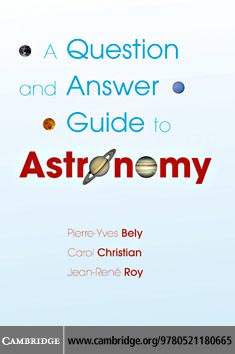
Одни ли мы во вселенной? Было ли что-нибудь до Большого Взрыва? Существуют ли другие миры? Что такое пятна на Солнце? Что такое падающая звезда? Была ли когда-либо жизнь на Марсе? Эта книга отвечает на эти завораживающие вопросы, которые мы задаем себе на протяжении сотен лет. Не используя технический язык, авторы подводят итоги современного астрономического знания, не забывая при этом осветить важные основополагающие научные принципы. Простым и вместе с тем тщательно написанным объяснениям сопутствуют красочные иллюстрации, схемы и фотографии. Обширная библиография позволяет вам резюмировать знания или продолжить заниматься этим предметом, который пробудил у вас интерес. Окунитесь в мир открытий и узнайте восхитительные факты о нашей Солнечной Системе и беспредельной Вселенной.
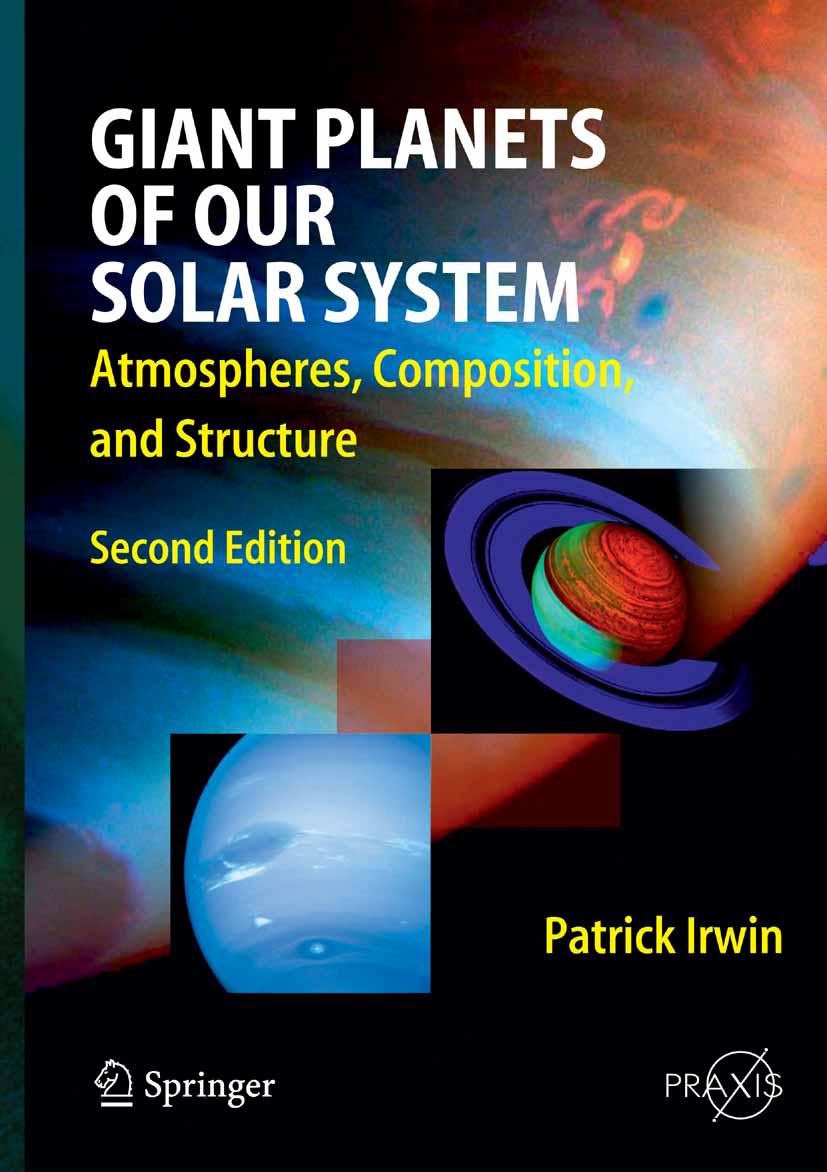
Книга рассматривает текущее состояние знаний об атмосфере газовых планет-гигантов: Юпитера, Сатурна, Урана и Нептуна. Приводятся нынешние теории их образования. Недавно наблюдаемые температуры, состав и облачные структуры сопоставляются и сравниваются с простым термодинамическим, излучательным переходом и динамическими моделями. Второе издание было значительно расширено и дополнено благодаря результатам миссии "Кассини" для Юпитера/Сатурна и новейшим наземным измерениям для Урана/Нептуна, а также последнему развитию теорий формирования планет.
|
Календарь
| « Июнь 2026 » |
|---|
| Пн | Вт | Ср | Чт | Пт | Сб | Вс |
|---|
| 1 | 2 | 3 | 4 | 5 | 6 | 7 | | 8 | 9 | 10 | 11 | 12 | 13 | 14 | | 15 | 16 | 17 | 18 | 19 | 20 | 21 | | 22 | 23 | 24 | 25 | 26 | 27 | 28 | | 29 | 30 | |
|